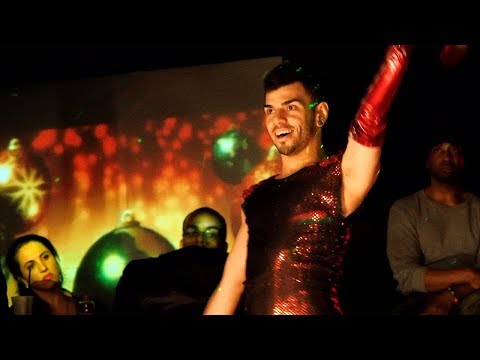
As a countercultural phenomenon, ball culture is rooted in necessity and defiance. According to findings by Dr. Genny Beemyn addressed in their book Trans Bodies, Trans Selves, members of the underground LGBTQ+ community in large cities of the late nineteenth century began to organize masquerade balls known as "drags" in direct defiance of laws banning citizens from wearing clothes of the opposite gender.
In his essay "Spectacles of Colors", Langston Hughes describes his experience at a drag ball in the 1920s.
"Strangest and gaudiest of all Harlem spectacles in the '20s, and still the strangest and gaudiest, is the annual Hamilton Club Lodge Ball at Rockland Palace Casino. I once attended as a guest of A'Lelia Walker. It is the ball where men dress as women and women dress as men. During the height of the New Negro era and the tourist invasion of Harlem, it was fashionable for the intelligentsia and social leaders of both Harlem and the downtown area to occupy boxes at this ball and look down from above at the queerly assorted throng on the dancing floor, males in flowing gowns and feathered headdresses and females in tuxedoes and box-back suits." —Langston Hughes
Although balls now feature mainly Black and Latino participants, the first known ball at the Hamilton Lodge was integrated. This was uncommon because at the time, racial segregation was nearly universal. Although the ball was integrated, racism was still very present, which prevented many Black performers from receiving prizes. There were no Black judges and many believe that the balls were rigged so that only Whites could win. This racial discrimination prompted Black and Latino attendees to form their own balls. In the subsequent decades, drag balls eventually developed the modern, mainstream format we know today.
The modern ballroom culture has existed for at least five decades. It remains largely underground and unknown for this particular community of Black and Latino queer youth. It began in Harlem more than 50 years ago, and has now expanded rapidly to other major cities. In New Orleans in the 1950s, they appeared at Mardi Gras celebrations and were originally called "krewes". In 2010, a documentary by Tim Wolff, called The Sons of Tennessee Williams, follows their history.
Moreover, with the advancements of social media, it has migrated to other countries such as Canada, Japan, and the UK. Ball culture was first captured and shown to a mainstream audience in Jennie Livingston's documentary, Paris is Burning (1990).